Bespoke Solutions Tailored to Your Business. Free Consultant
Unit-2, 61 Princelet Street, E1 5LP, London


How a Website Helps Small Businesses Generate Leads
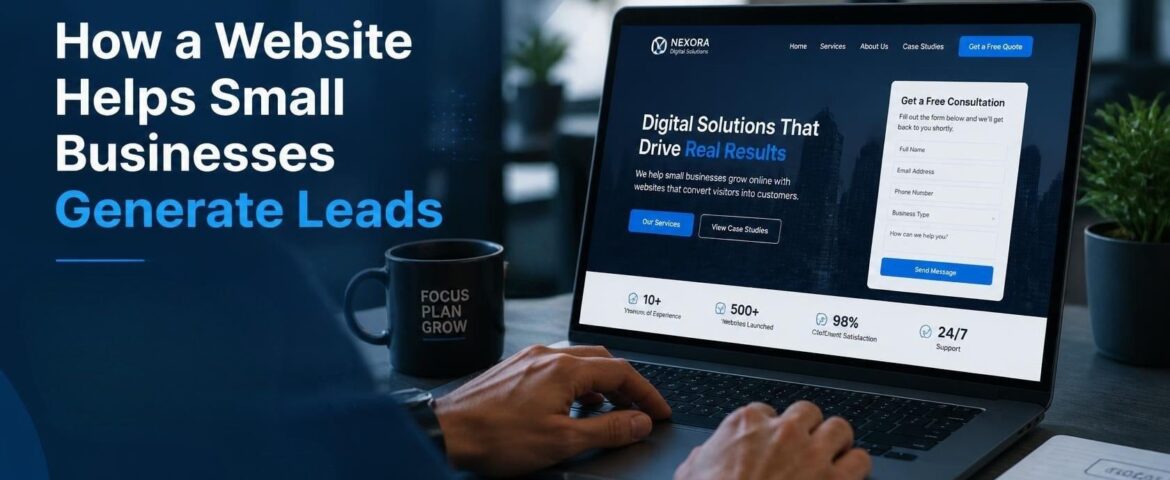
Website lead generation for small businesses can help companies attract potential customers, build trust and turn online visitors into real enquiries. Today, people often search online before choosing a restaurant, hotel, consultancy firm, service provider or local business. Therefore, having a professional website can make a major difference in how customers discover and contact a company.
A business website is more than a place to display basic company information. Instead, it can work as a marketing platform that brings together SEO, useful content, service information, contact options and conversion-focused design.
For small businesses in Sylhet, a website can be especially useful because local customers often search online before making a decision. Moreover, people may compare several businesses before sending a message, making a phone call or requesting a quotation.
At Dort Studio, the goal is to create practical websites that support real business needs. A well-planned website should not simply look attractive. More importantly, it should help visitors understand a business and take the next step.
What Is Website Lead Generation?
Website lead generation is the process of attracting potential customers to a website and encouraging them to take an action that shows interest in a business.
Website traffic alone is not enough. For example, a visitor may read a page and leave without contacting the company. Another visitor may explore a service, check previous work and then submit an enquiry.
The second visitor has become a potential lead.
Common website lead actions include:
- Contact form submissions
- Phone calls
- WhatsApp messages
- Quote requests
- Appointment bookings
- Consultation requests
- Product enquiries
- Service enquiries
- Email subscriptions
Therefore, a lead-generating website should focus on both attracting the right visitors and giving them simple ways to contact the business.
Why Small Businesses Need a Website for Lead Generation
Small businesses often rely on Facebook, referrals, offline marketing and paid advertisements. Although these channels can be useful, they do not always provide customers with enough information about a company.
A professional website solves this problem by creating one central place where customers can learn about the business.
For instance, visitors can quickly discover:
- What the business offers
- Who the services are for
- Where the company operates
- How to contact the business
- What previous customers think
- What previous projects have been completed
As a result, the website can support the entire customer journey.
A simple journey may look like this:
Search → Website Visit → Service Information → Trust → Enquiry
When each stage is clear, generating leads becomes much easier.
1. A Website Makes Your Business Easier to Find Online
Potential customers frequently use search engines when they need a product or service. Because of this behaviour, a website creates an opportunity for your business to appear when someone is actively searching.
For example, people in Sylhet may search for:
- Small business website in Sylhet
- Website development company in Sylhet
- Restaurant in Sylhet
- Travel agency in Sylhet
- Hotel in Sylhet
- Business consultancy in Sylhet
- Training centre in Sylhet
If your website contains useful pages related to those searches, it may attract relevant organic traffic.
SEO also helps search engines understand the subject of each page. Consequently, a properly structured website can become an important part of your long-term digital marketing strategy.
2. Local SEO Helps You Reach Customers in Sylhet
Not every small business needs customers from across the world. In fact, many companies mainly depend on people living or searching within their local area.
A restaurant in Sylhet, for example, wants customers who can realistically visit or order food. Similarly, a local clinic may mainly want patients from Sylhet and nearby areas.
Local SEO helps make your business location clearer.
Useful local information can include:
- Business name
- Address
- Phone number
- Opening hours
- Service areas
- Google Maps location
- Local service information
- Contact details
In addition, a Google Business Profile can support local visibility.
Location-focused pages can also help customers find relevant services. However, location names should always be used naturally. Repeating Sylhet unnecessarily throughout every paragraph can make the content difficult to read.
Instead, businesses should create useful content that genuinely helps local customers.
3. A Professional Website Builds Trust
Trust plays an important role in lead generation.
Before contacting an unfamiliar business, customers often want to know whether the company appears reliable. Therefore, they may look for information about the team, experience, services and previous work.
A professional website gives you enough space to provide that information clearly.
Trust-building elements may include:
- An About Us page
- Customer testimonials
- Previous projects
- Service pages
- Team information
- Contact information
- Frequently asked questions
- Business location
- Client feedback
Visitors who want to understand more about the company can learn about Dort Studio.
Meanwhile, people who prefer to judge a business by its work can explore Dort Studio projects.
By providing useful evidence, a website can reduce uncertainty and make potential customers feel more comfortable about making contact.
4. Your Website Can Collect Enquiries 24 Hours a Day
A business may close at the end of the working day. However, its website can remain available.
Someone might discover your company late at night. Although your team may not be online, the visitor can still read service information, check previous work and submit an enquiry.
As a result, your business can collect potential leads outside normal opening hours.
Customers may be able to:
- Submit a form
- Send a WhatsApp message
- Request a quotation
- Read about services
- Check contact details
- View projects
This always-available online presence can be especially valuable for smaller companies with limited staff.
5. Dedicated Service Pages Attract Relevant Visitors
A homepage should introduce your company. However, putting every service on one page can make the website confusing.
Dedicated service pages provide a better solution.
For example, a digital company may create separate pages for:
- WordPress development
- Laravel development
- App development
- UI and UX design
- Business website development
Similarly, a travel agency may create pages for visa services, air tickets, holiday packages, Hajj and Umrah.
Each page can focus on one customer need. As a result, visitors can find relevant information much faster.
Separate pages can also target different search terms naturally. Furthermore, every service page can include its own call-to-action.
You can explore the services provided by Dort Studio to see how individual services can be organized clearly.
6. Calls-to-Action Encourage Visitors to Take the Next Step
Website visitors should always understand what they can do next.
A call-to-action gives them that direction.
Common CTA examples include:
- Get a Quote
- Contact Us
- Call Now
- Book a Consultation
- Send a Message
- Discuss Your Project
- Request Information
Different businesses need different calls-to-action.
For instance, a hotel may use Check Availability. A restaurant may use Book a Table. Meanwhile, a web development company may encourage visitors to request a project quotation.
Clear CTAs reduce confusion. Consequently, visitors have a simple path from reading about the service to contacting the business.
7. Contact Forms Make Lead Capture Simple
Some potential customers prefer not to call immediately. Therefore, contact forms give them another convenient option.
A basic form may ask for:
- Name
- Phone number
- Email address
- Required service
- Short message
Keeping the form simple is important.
Long forms may discourage visitors from completing them. In contrast, shorter forms make the first contact easier.
The initial goal is to start a conversation. More detailed information can be collected later if necessary.
8. WhatsApp Can Make Communication Faster
Many customers prefer messaging because it is quick and familiar.
Adding a WhatsApp contact option can therefore shorten the journey between interest and enquiry.
For example, someone may read a service page and have one small question. Instead of searching for contact information, the visitor can click the WhatsApp button and start a conversation.
This option can work particularly well for:
- Travel agencies
- Hotels
- Restaurants
- Consultancies
- Training centres
- Real estate companies
- Local service businesses
However, not everyone wants to communicate in the same way. For this reason, offering forms, calls and messaging options gives customers more flexibility.
9. Landing Pages Can Improve Marketing Campaigns
A landing page focuses on one specific product, service or campaign.
Suppose a company runs an advertisement for professional small business website development. Sending every visitor to the general homepage may create unnecessary distractions.
Instead, the advertisement can direct visitors to a page created specifically for that service.
A useful landing page may contain:
- Clear headline
- Customer problem
- Service solution
- Benefits
- Important features
- Previous work
- Testimonials
- FAQs
- Contact form
- Strong CTA
Because everything on the page supports the same goal, visitors can understand the offer faster.
Landing pages can support campaigns from Facebook, Instagram, Google Ads, email marketing and other channels.
10. Blog Content Brings Potential Customers to Your Website
Some customers are ready to buy immediately. Others need information before making a decision.
Blog content can reach people during that research stage.
For example, potential customers may search for:
- How does a website generate leads
- How much does a business website cost
- Does a small business need a website
- Why is my website not generating enquiries
- WordPress or custom website for small business
A useful article can answer these questions while introducing readers to your business.
After reading the article, a visitor may explore a service page. Next, the person might check your previous work. Eventually, that reader may submit an enquiry.
Therefore, useful blog content can support both SEO and long-term lead generation.
11. Internal Linking Helps Visitors Find Related Information
Internal links connect one page of a website to another relevant page.
They are useful because visitors do not always arrive through the homepage.
For example, someone reading this article may want to understand what Dort Studio offers. That person can visit the Dort Studio homepage for an overview.
Another visitor may want more detailed service information. In that case, the Dort Studio services page provides the next logical step.
Likewise, potential customers can browse our previous projects before making a decision.
Those who want to know more about the company can also visit the About Us page.
As a result, internal linking creates a smoother journey through the website.
12. Mobile-Friendly Design Helps Prevent Lost Leads
Many customers browse websites using smartphones.
Consequently, a business website needs to work properly across different screen sizes.
A poor mobile website may have:
- Text that is difficult to read
- Small buttons
- Broken layouts
- Difficult navigation
- Oversized images
- Complicated forms
These problems can make visitors leave before contacting the business.
Responsive website design helps solve this issue by adapting the layout for mobile phones, tablets and computers.
Moreover, phone numbers and contact buttons should be easy to tap. Contact forms should also be simple to complete on smaller screens.
A smoother experience creates fewer barriers between the customer and the enquiry.
13. Website Speed Affects User Experience
Visitors expect websites to load quickly.
A slow website can create frustration before customers even read the service information. Therefore, website performance deserves attention.
Common causes of slow websites include:
- Large image files
- Poor hosting
- Too many plugins
- Heavy scripts
- Unnecessary animations
- Poorly optimized code
Reducing these problems can improve the browsing experience.
Furthermore, faster pages help customers move easily between service pages, project pages and contact forms.
Speed alone will not generate leads. Nevertheless, good performance removes a common reason for potential customers to leave.
14. Testimonials and Previous Projects Build Confidence
Customers naturally want evidence before choosing a company.
Testimonials can show what previous customers experienced. Meanwhile, portfolios and project pages can demonstrate what the business has actually produced.
A website development company, for example, might show:
- Website screenshots
- Previous designs
- Project information
- Client industries
- Completed development work
- Customer feedback
Showing evidence is usually more convincing than simply describing your company as professional.
Potential customers can review Dort Studio’s previous projects to see examples of work before making contact.
As a result, project pages can support both trust and lead generation.
15. FAQs Help Remove Customer Doubts
People often have questions before they are ready to contact a business.
Typical questions include:
- How much does the service cost?
- How long does the project take?
- What information do I need to provide?
- Will the website work on mobile?
- Can the website be updated later?
- Is support available after completion?
Answering these questions can make the customer journey easier.
Furthermore, an FAQ section allows visitors to find basic information without waiting for a reply.
When uncertainty is reduced, customers may feel more confident about taking the next step.
16. Analytics Helps Businesses Improve Lead Generation
Launching a website should not be the final step.
Businesses should also understand how visitors use the site.
Analytics can help monitor:
- Website visitors
- Traffic sources
- Popular pages
- Landing pages
- Conversion actions
- Marketing traffic
- User behaviour
Imagine a service page receiving many visitors but almost no enquiries.
Several problems could be responsible. Perhaps the CTA is difficult to find. Alternatively, the contact form could be too long.
The page may also lack enough information or trust signals.
By checking website data, businesses can identify these problems and make improvements.
Therefore, measurement should be part of any long-term website lead generation strategy.
How Different Small Businesses Can Use Websites to Generate Leads
The basic principles are similar across industries. However, the type of lead can change depending on the business.
Restaurants
Restaurant websites can display menus, opening hours, locations, food photos and booking options.
As a result, customers can quickly decide whether they want to visit or make a reservation.
Hotels
Hotel websites can show room types, facilities, photographs, prices and location details.
In addition, booking and availability options can help turn visitors into enquiries.
Travel Agencies
Travel agencies can create separate pages for visas, air tickets, holiday packages, Hajj and Umrah.
Consequently, customers searching for a particular service can reach the most relevant page.
Consultancy Firms
A consultancy website can explain services, processes, requirements and consultation options.
Because customers can research beforehand, they may arrive at the first conversation better informed.
Training Centres
Training centres can publish course information, class schedules, fees and admission details.
Moreover, registration and enquiry forms can capture potential students directly.
Real Estate Companies
Property websites can include photographs, locations, features and contact buttons.
Each property page can therefore become an individual opportunity to generate leads.
Website vs Social Media for Lead Generation
Social media is useful for small businesses. However, a website offers different advantages.
Platforms such as Facebook and Instagram are useful for:
- Sharing updates
- Publishing photos and videos
- Building an audience
- Communicating with followers
- Running advertisements
A website gives businesses greater control over:
- Service information
- SEO
- Landing pages
- Blog content
- Contact forms
- Project portfolios
- Conversion tracking
Therefore, businesses do not necessarily need to choose between social media and a website.
Instead, both can work together.
For example:
Facebook Ad → Landing Page → Enquiry
Instagram Post → Service Page → WhatsApp Message
Google Search → Blog Post → Service Page → Contact Form
Referral → Website → Portfolio → Phone Call
In this structure, social media can attract attention while the website provides deeper information and lead-capture opportunities.
Common Website Lead Generation Mistakes
Even a visually attractive website can struggle to generate enquiries.
Several common problems may be responsible.
No Clear CTA
Visitors may leave because they do not know what action to take.
Weak Mobile Experience
Customers can become frustrated when the website is difficult to use on a phone.
Slow Loading Pages
Poor performance creates an unnecessary barrier.
Limited Service Information
Customers need enough detail to understand what you provide.
No Local Information
Local businesses should clearly communicate where they operate.
Missing Trust Signals
Previous work and genuine customer feedback can support credibility.
Long Contact Forms
Too many fields can discourage enquiries.
No Analytics
Businesses cannot improve effectively if they do not understand website performance.
How to Improve an Existing Website
A website that receives traffic but few leads may not always need a complete rebuild.
First, review the homepage and important service pages. Make sure visitors can understand the business quickly.
Next, check your calls-to-action and contact options. They should be easy to find.
Then, examine mobile usability and website speed.
Afterwards, review service descriptions, testimonials, projects and local business information.
Finally, track what happens after the improvements are made.
This step-by-step approach can reveal where visitors are getting stuck in the customer journey.
How Dort Studio Can Help Small Businesses
Building a successful website starts with understanding what the business actually needs.
At Dort Studio, the focus is on creating digital solutions that support business goals rather than adding unnecessary features.
Businesses can explore the available Dort Studio services to understand different development options.
Potential clients can also learn more about Dort Studio and review completed website projects.
Before starting a website project, consider several questions.
Who is your ideal customer?
What are they searching for?
Which services matter most?
What questions do customers usually ask?
What should visitors do after reaching the website?
How will enquiries be collected?
Once these questions are clear, the website can be planned around genuine customer needs.
Frequently Asked Questions
What is website lead generation for small businesses?
Website lead generation for small businesses involves attracting potential customers to a business website and encouraging them to make contact through forms, calls, messages, bookings or other enquiry methods.
How does a website help generate leads?
A website can attract visitors through search engines, social media, advertising and referrals. Afterwards, service pages, trust signals and clear calls-to-action can encourage those visitors to contact the business.
Can a website generate leads without paid advertisements?
Yes. Organic search, local SEO, useful blog content, social media and referrals can all bring potential customers to a website. However, organic visibility generally requires time and consistent work.
Is a website necessary if I already have Facebook?
Facebook can support marketing and communication. Nevertheless, a website provides more control over service pages, SEO, content, landing pages, contact forms and conversion tracking.
What does a lead-generating website need?
A good lead-generating website should include clear service information, simple navigation, responsive design, strong calls-to-action, contact options, fast performance and trust signals.
Can local SEO help a small business in Sylhet?
Yes. Local SEO can make it easier for customers and search engines to understand where your business operates. Accurate location details, useful local content and relevant service pages can support local visibility.
How quickly can a website start generating leads?
There is no fixed timeframe. Results depend on factors such as website traffic, competition, SEO, marketing, service demand and conversion quality.
Conclusion
Website lead generation for small businesses works best when a website is designed around real customer needs.
A successful website should first help potential customers find the business. Next, it should provide clear information about services. Trust signals can then help visitors feel confident about the company.
Finally, simple calls-to-action, contact forms, phone numbers and messaging options make it easier for interested visitors to become leads.
For small businesses in Sylhet, a well-planned website can also support local SEO, organic traffic, customer trust and long-term digital growth.
If your current website receives visitors but generates very few enquiries, review the complete customer journey. Improving the content, navigation, calls-to-action, mobile experience and contact process may help turn more visitors into potential customers.
To explore professional website solutions, visit Dort Studio or learn more about our web development services.
Leave A Comment